Bottom brackets
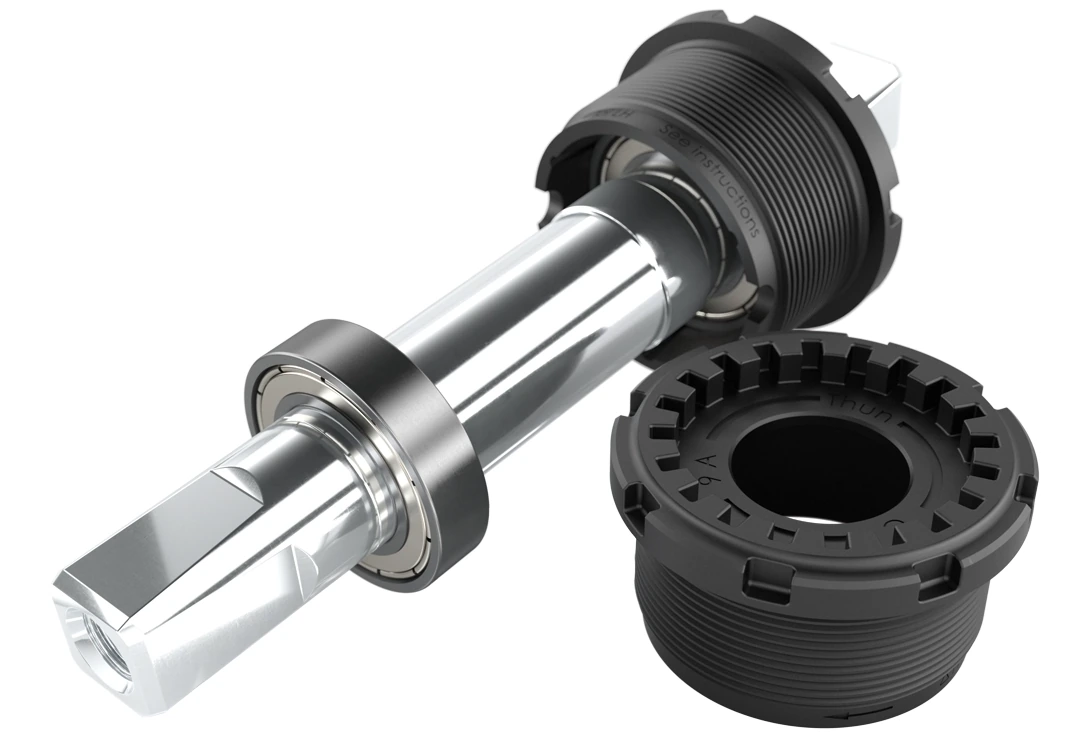
A bottom bracket enables the rotation of the crankset and ensures efficient transfer of pedaling power into the drivetrain. As the interface between the crankset and the frame, it supports the spindle and bearings that allow smooth, reliable rotation under load. Its tolerances, alignment and sealing directly influence drivetrain efficiency, durability and warranty performance.
For manufacturers and assemblers, the bottom bracket is therefore a critical system interface. Precision production ensures consistent assembly and long service life across production volumes and different frame materials.
THUN develops bottom brackets for reliable integration into OEM bicycle platforms and established industry standards. The company produces more than 50,000 units per day at its facility in Ennepetal, Germany. This output continuously validates tolerances, sealing concepts and quality processes under real production conditions.

Browse our bottom brackets
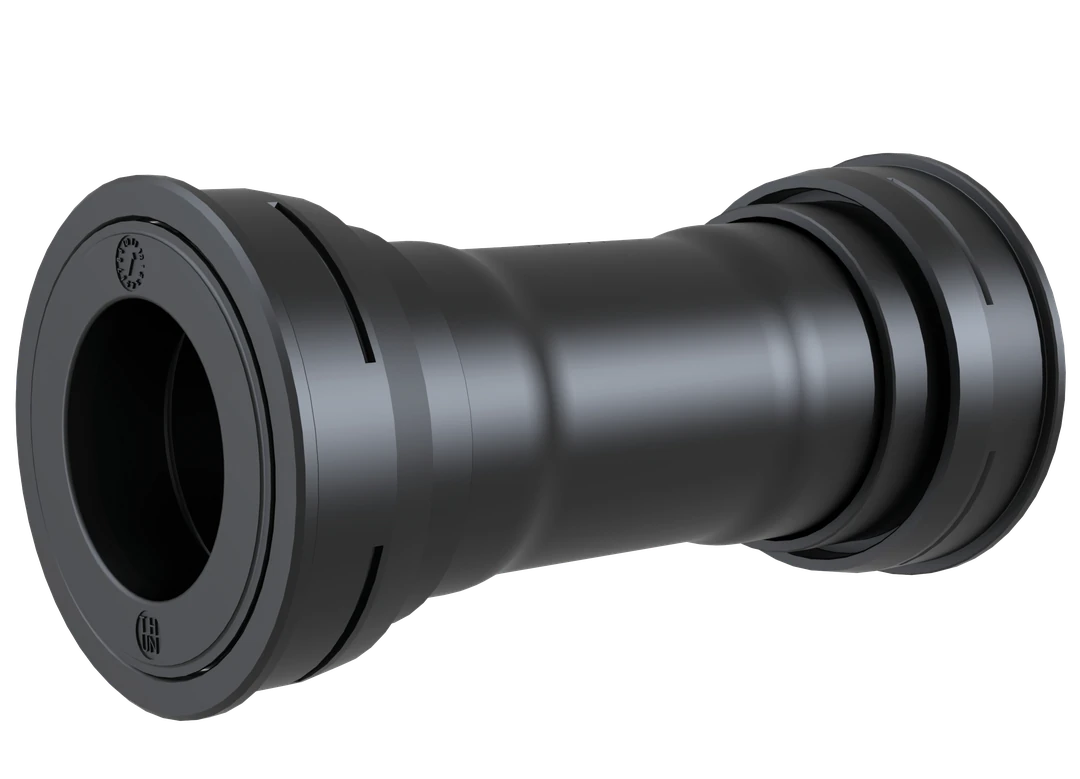
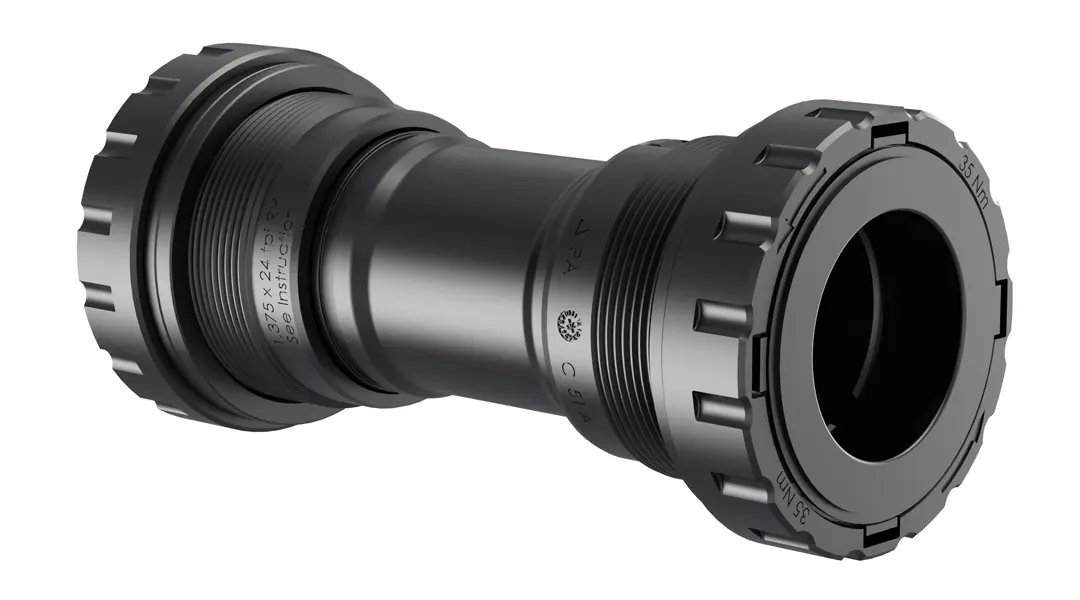
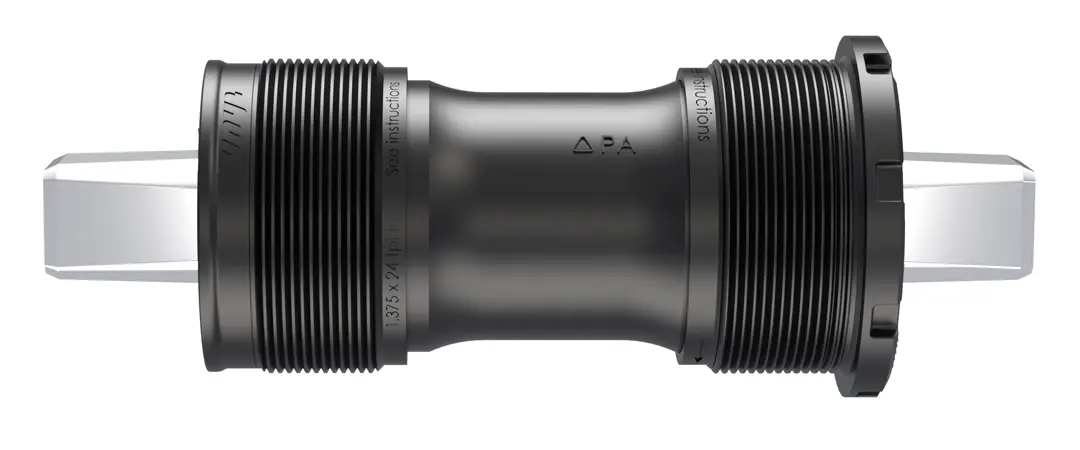
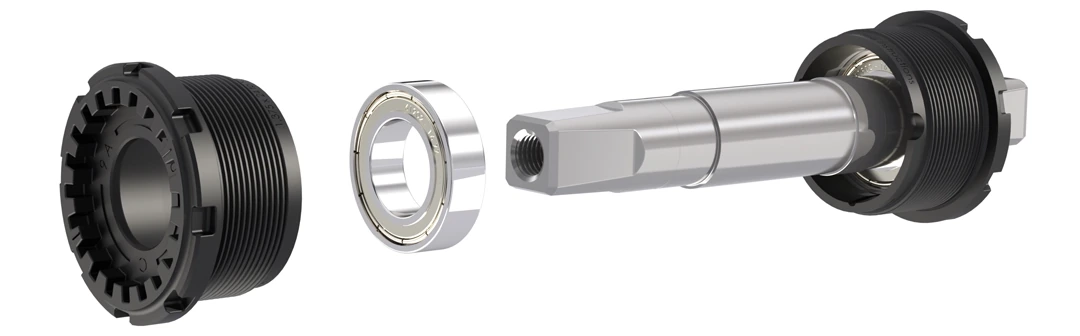
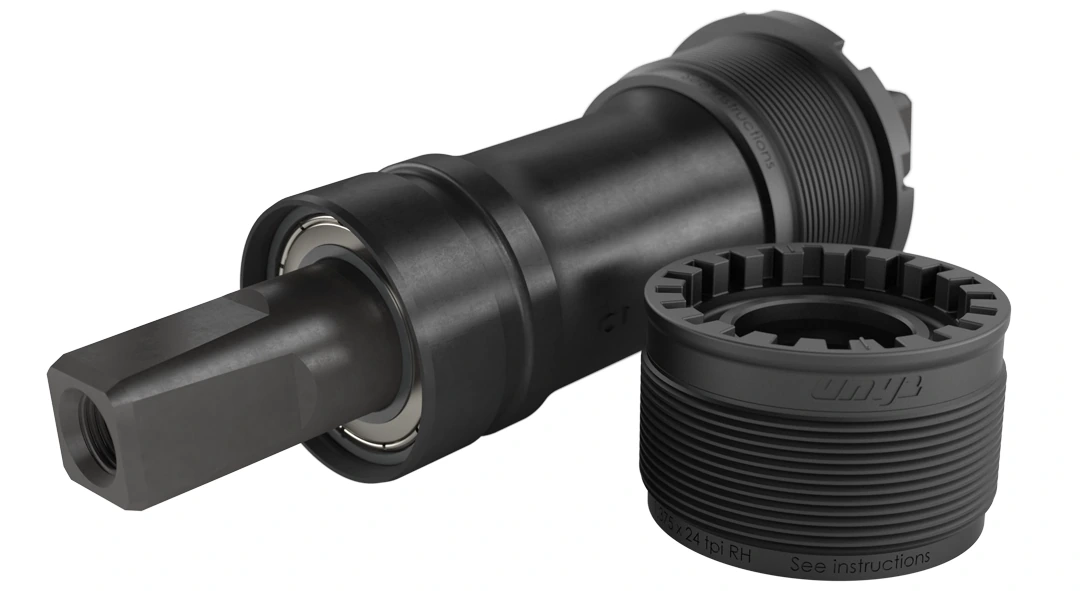
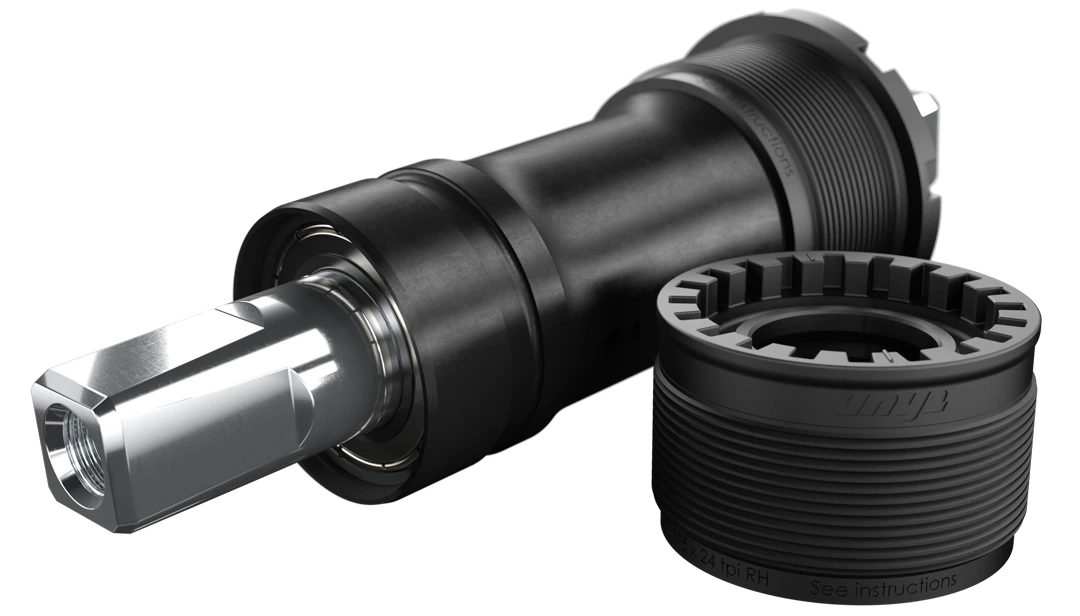
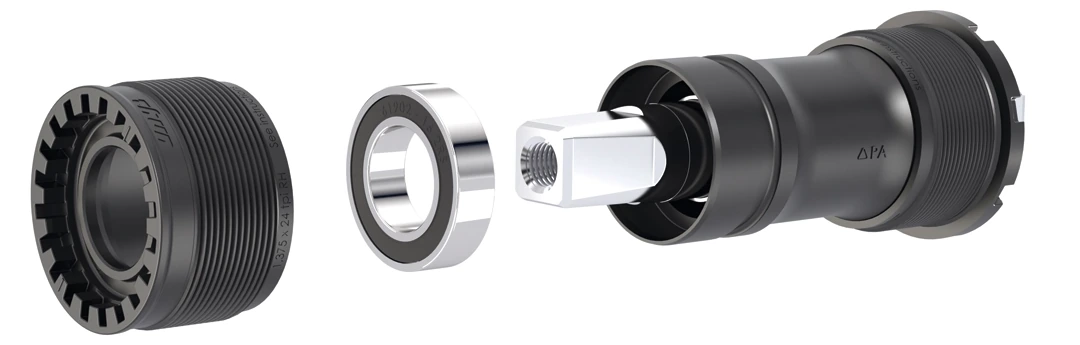
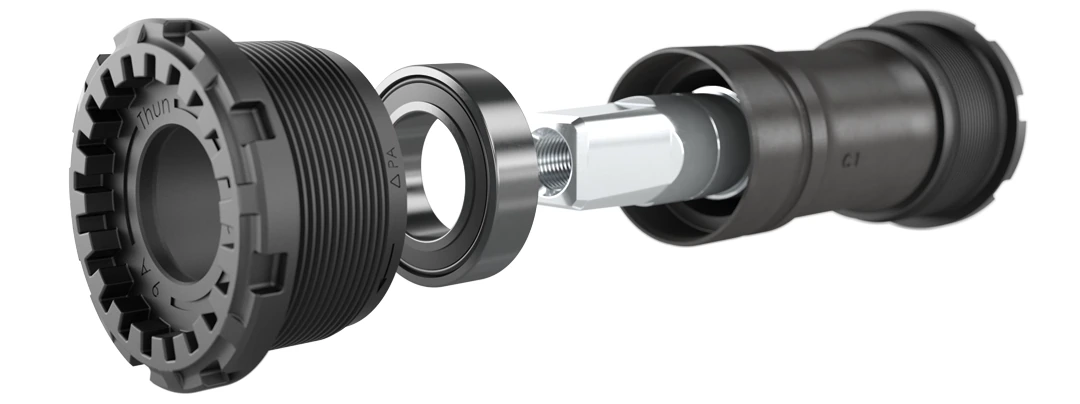
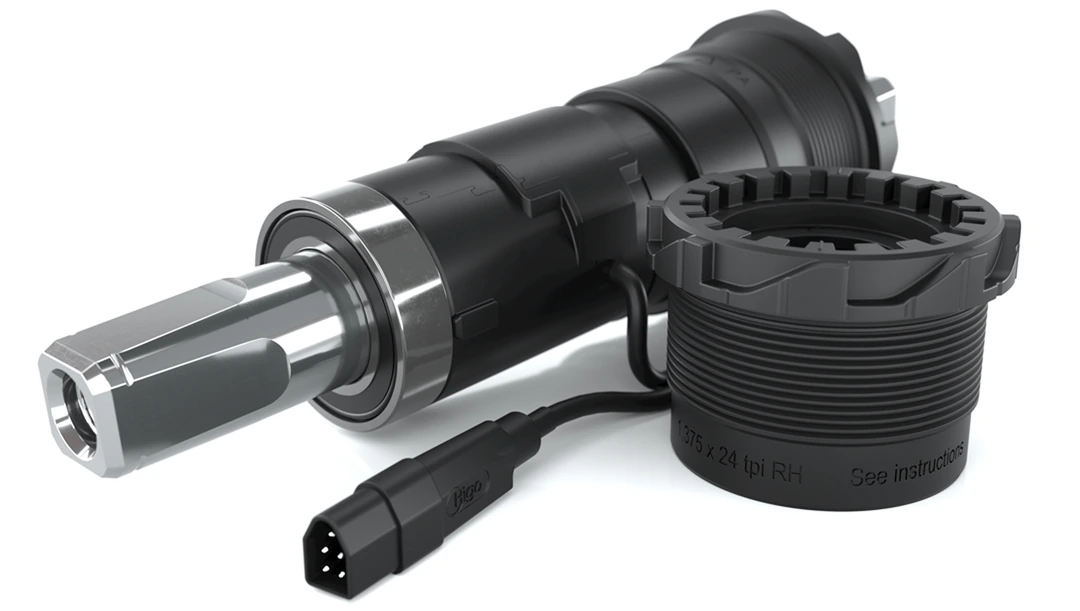
Choosing the right bottom bracket
Standards and Interface Compatibility
Bottom bracket selection begins with the frame interface. Shell width, diameter, threading and spindle configuration determine compatibility and installation behavior.
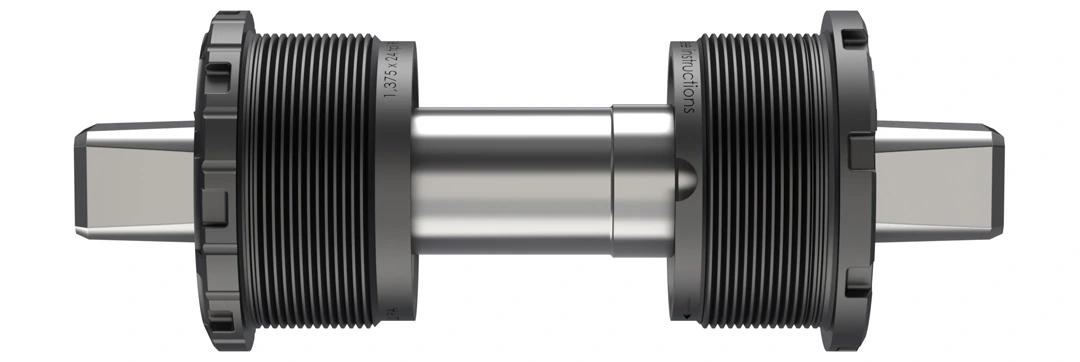
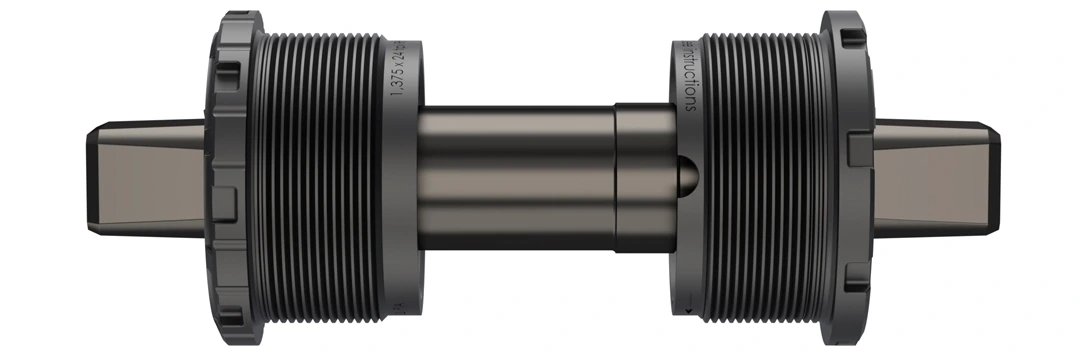
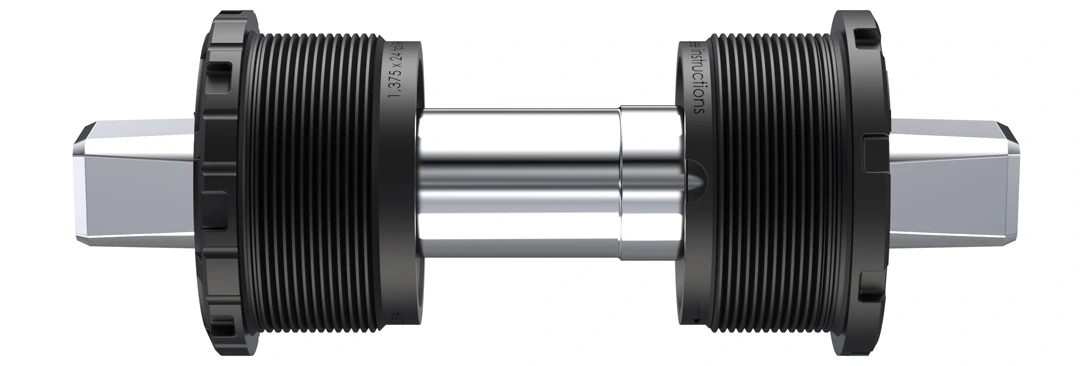
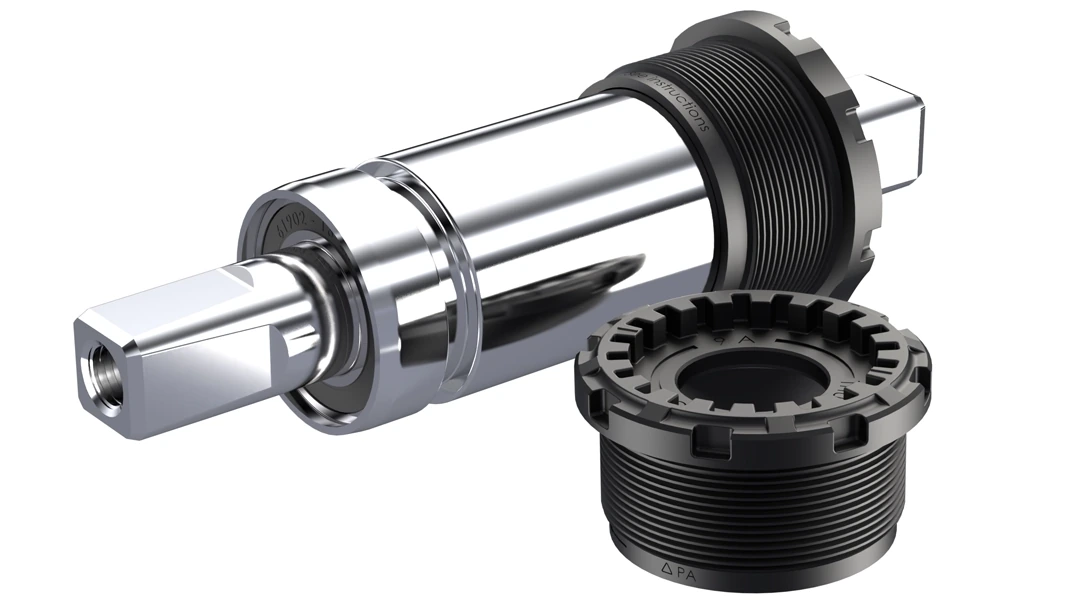
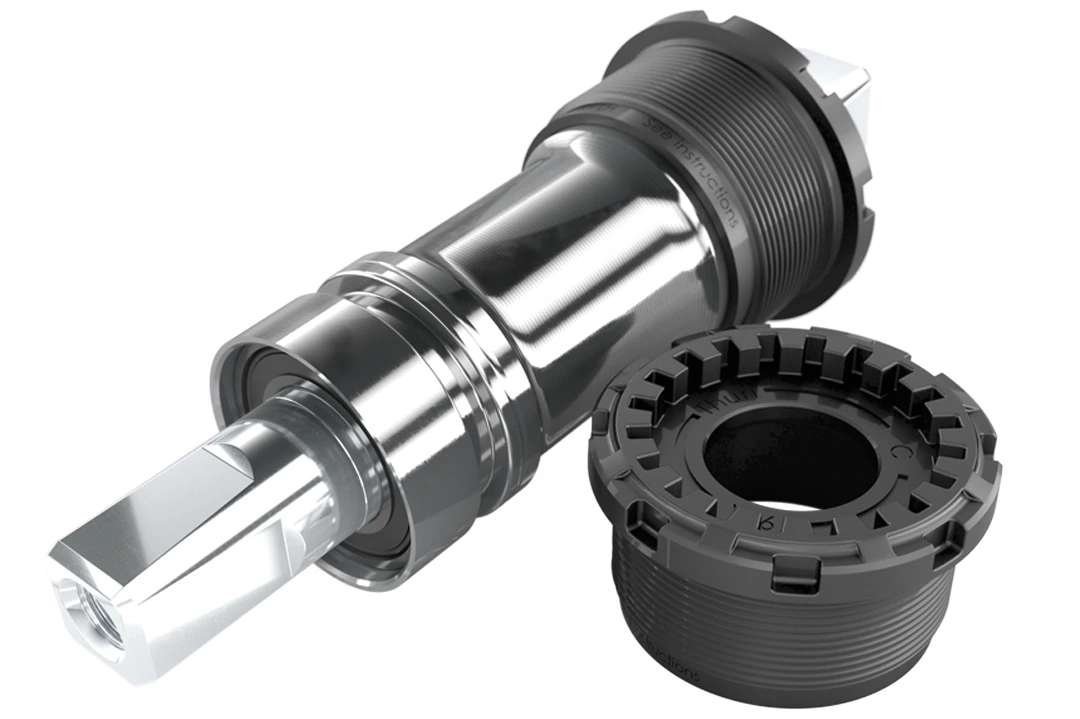
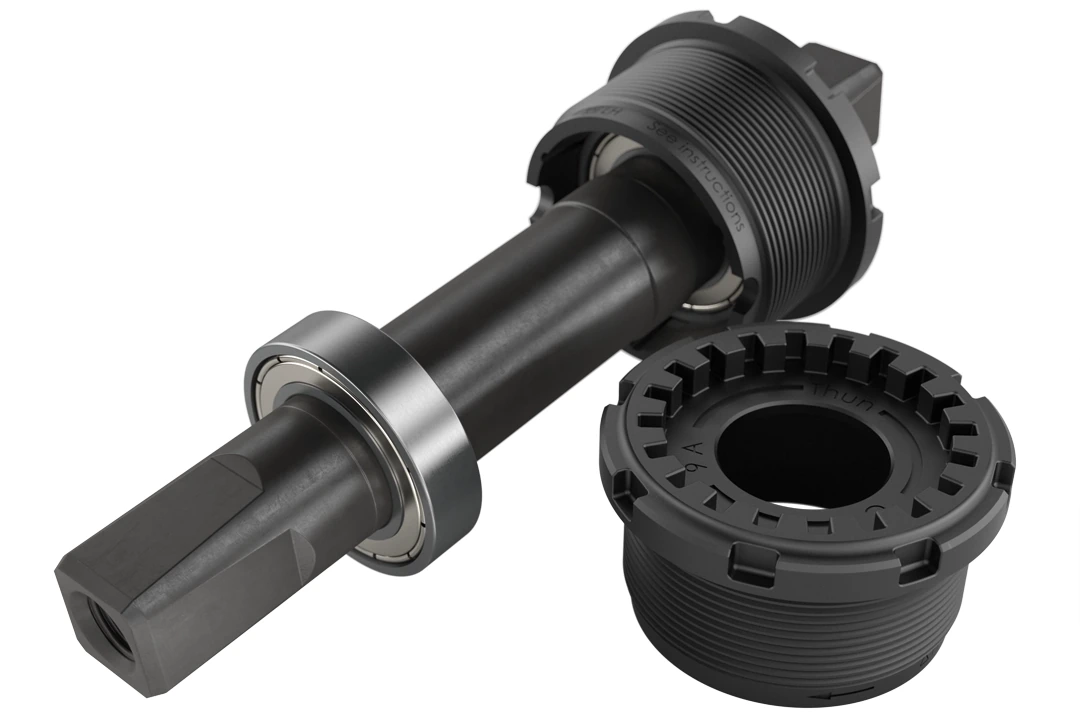
Threaded BSA shells remain widely used due to their robustness and serviceability. For city, trekking and volume platforms, cartridge series such as GOAL and PASO provide stable alignment in 68 mm and 73 mm shells and support consistent assembly processes.
Press-fit systems allow lightweight frame construction but require tighter control of shell tolerances and installation procedures. Dimensional deviation or improper press-fit conditions can lead to interface movement and noise development over time.
Correct specification includes:
Shell specifications (diameter, width, threading)
Frame construction and bottom bracket shell design
Spindle length, diameter, and crank interface
Installation torque and tool access

Reliability in Series Production
In OEM assembly and high-volume series production, bottom bracket failures rarely originate in the core components themselves. They emerge during integration — driven by tolerance accumulation between frame and bottom bracket housing, contamination in assembly processes, and micro-movement at interface surfaces.
These issues are system-driven rather than component-specific and increase with production volume and assembly variability. Different platform requirements amplify these effects in different ways.
Higher loads and extended service life increase sensitivity to misalignment, making alignment stability a critical factor. Families such as IBEX and JIVE address this through defined bearing positioning and multi-stage sealing, reducing sensitivity to installation variability.
When cable routing and bottom bracket–integrated torque and cadence sensing are part of the platform design, additional interface constraints arise — particularly in sealing, space allocation, and cable durability. Systems such as TANGO and ZUMBA are designed to manage these constraints in electrified platforms without introducing new failure paths.
New drivetrain concepts further increase integration complexity by changing interface conditions and load paths. Assemblies such as RUMBA and CHACHA adapt to these requirements while maintaining durability under ISO-relevant conditions in real production environments.
Ultimately, reliability is not defined by the individual component or its categorization, but by how consistently the system performs across thousands of assembly cycles.

Integration into Modern Bicycle Platforms
Bottom brackets influence more than drivetrain rotation. They affect:
Assembly sequence
Tool access
Frame stiffness behavior
Long-term warranty exposure
Defined tool interfaces, controlled tolerances and documented specifications reduce variability in OEM assembly processes and improve repeatability across high-volume bicycle assembly lines.
Selecting the correct bottom bracket family early in development helps ensure stable performance throughout the product lifecycle.
Durability and Responsibility
For bicycle components, longevity is a key factor in resource consumption. A bottom bracket that operates reliably for years reduces replacement parts, service intervals and transport effort. THUN designs bottom brackets for long service life and consistent tolerances in order to minimize premature wear and warranty returns. Manufacturing in Germany also enables controlled processes and stable supply chains for OEM partners.
Your Contact at Thun
Have questions about standards, compatibility or integration into your setup? Our sales and engineering teams are here to help you.

Carina Füllbeck
Vice President SalesFAQs
A bottom bracket is the component installed inside the frame’s bottom bracket shell. It supports the crank spindle and enables smooth rotation of the crankset while transmitting pedaling loads into the drivetrain.
Creaking usually results from micro-movement between the frame and the interface surfaces, not from the bearing itself. Common causes include shell tolerance deviation, improper installation or contamination.
Threaded bottom brackets screw into the frame and tolerate small dimensional variation. Press-fit systems rely on very precise frame tolerances and controlled installation. Both can function reliably when correctly specified and assembled.
Service life depends mainly on sealing quality, alignment and installation conditions. In a properly specified OEM application, a bottom bracket is expected to operate for years without functional issues.
No single universal standard exists. Compatibility depends on shell width, shell diameter and spindle interface. Correct specification during development is essential.